Icicles hanging from a gutter can look harmless, even picturesque. But a thick ridge of ice along the edge of a roof is often a sign of an ice dam, and ice dams are one of the most common causes of winter leaks in homes, townhomes, and multi-unit buildings across the Northeast.
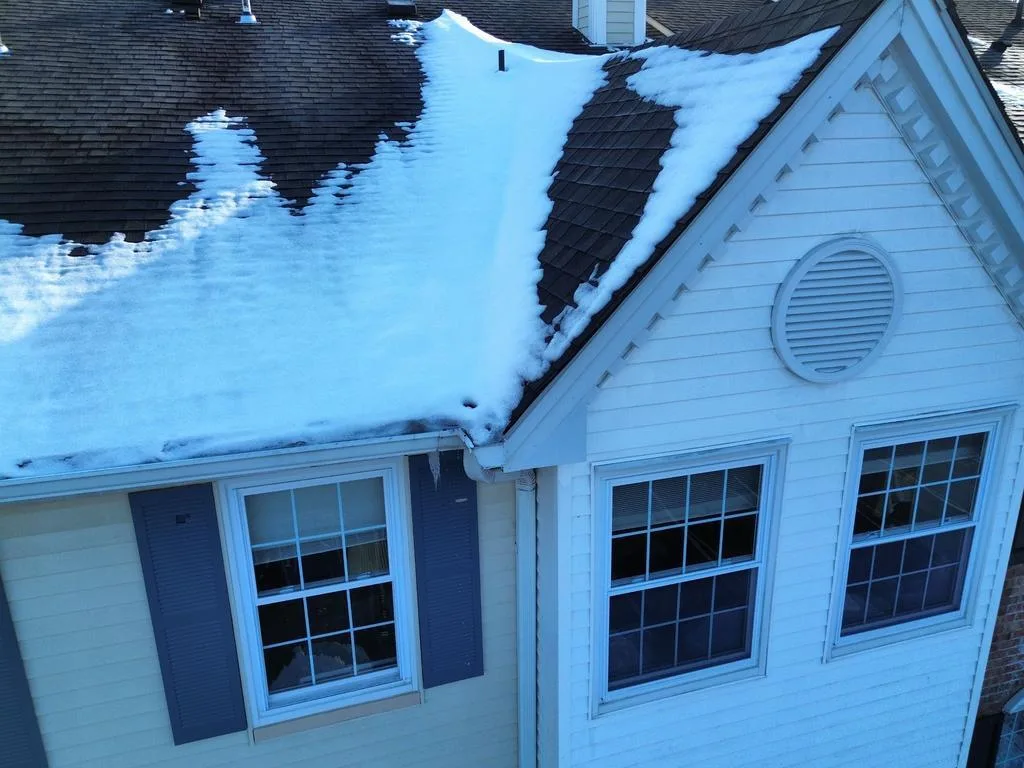
An ice dam forms when snow on the upper part of a roof melts, runs down toward the eaves, and refreezes at the colder roof edge. Over time that ice builds into a ridge that traps more meltwater behind it. With nowhere to drain, the water can back up under the shingles and into the roof deck, walls, and ceilings below.
Understanding why ice dams form is the first step toward preventing them.
Heat Escaping Into the Attic
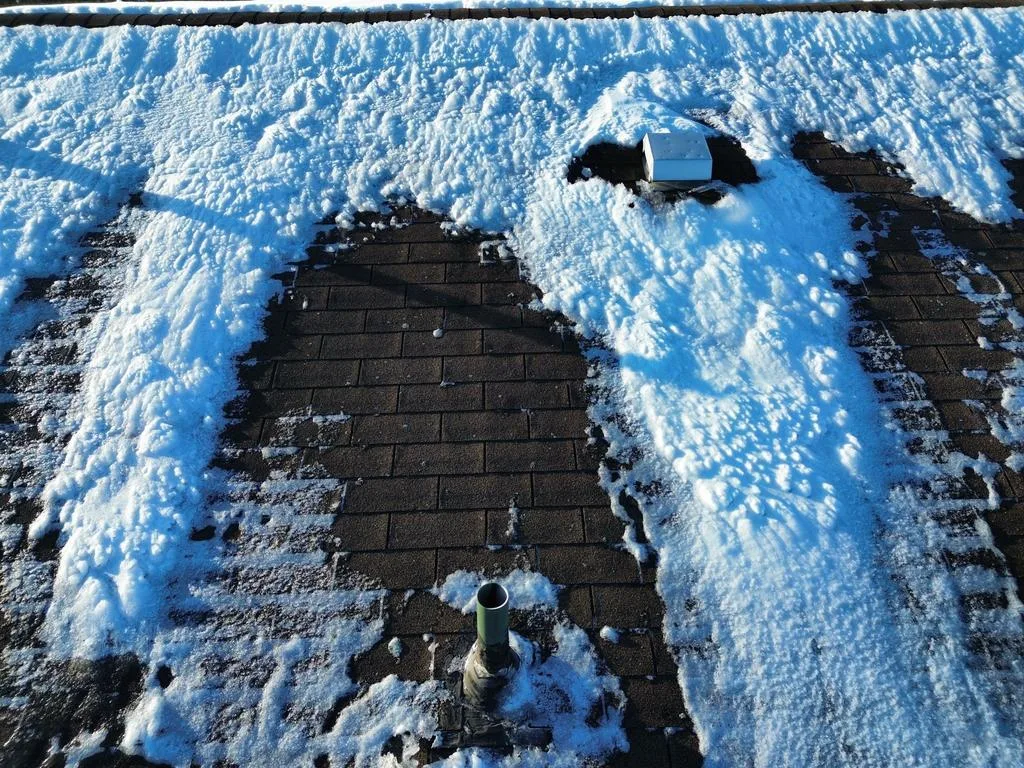
Most ice dams start inside the building. When warm air leaks into the attic from the living space, it warms the underside of the roof deck. Snow on the upper roof melts even when the outdoor temperature is below freezing, while the overhang at the eaves stays cold.
Common sources of attic heat:
- Gaps around light fixtures, ceiling fans, and attic hatches
- Openings around plumbing vents and chimneys
- Bathroom and kitchen exhaust fans that vent into the attic instead of outdoors
- Thin or uneven attic insulation
- Ductwork running through the attic
Sealing air leaks and bringing insulation up to the proper level helps keep the roof deck closer to the outdoor temperature, which is what prevents uneven melting.
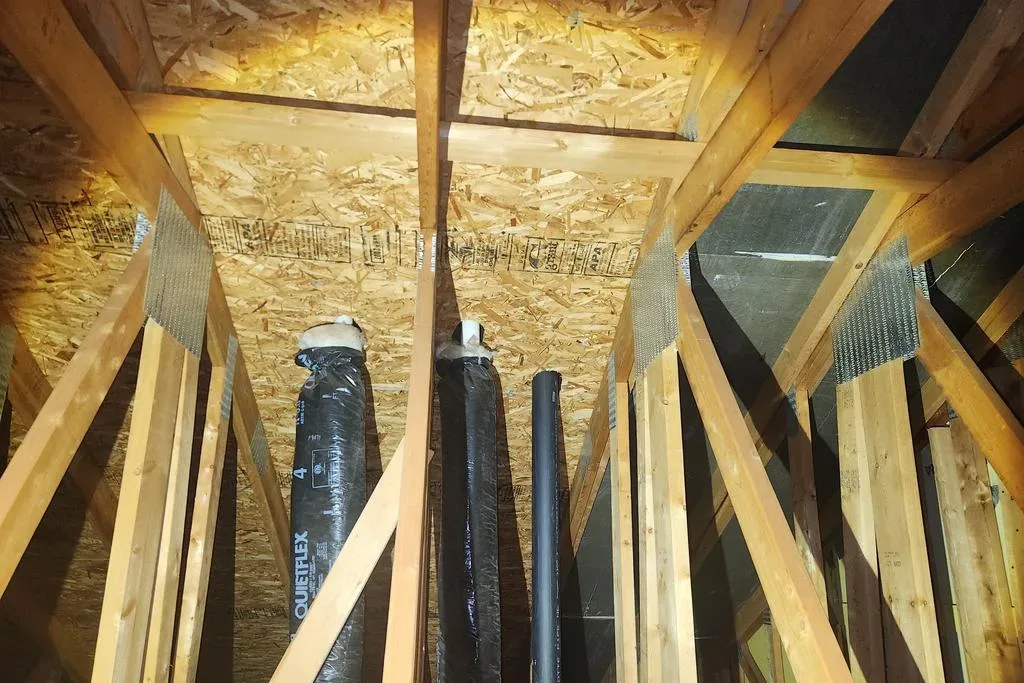
Poor Attic Ventilation
A well-ventilated attic lets cold outside air move in through the soffits and out near the ridge. This airflow carries away heat and moisture before they can warm the roof deck.
When soffit vents are blocked by insulation, painted over, or missing altogether, the attic can trap heat. Ventilation problems can also lead to condensation, mold, and early deterioration of roofing materials, so they are worth correcting even apart from ice dams.
Clogged Gutters and Downspouts
Gutters do not cause ice dams on their own, but gutters packed with leaves give meltwater a place to collect and freeze. Ice-filled gutters also add significant weight to the roof edge and can pull gutters and hangers away from the fascia.
Cleaning gutters in the fall, after most leaves have dropped, helps meltwater drain away during winter thaws.
Warning Signs of an Ice Dam
- A thick ridge of ice along the eaves or inside the gutters
- Large icicles, especially ones forming behind the gutter
- Water stains or peeling paint on ceilings near exterior walls
- Damp insulation or frost on the underside of the roof deck in the attic
- Stains or streaks on exterior walls below the roof line
If you notice water coming inside during a winter thaw, it is worth having the roof and attic evaluated rather than assuming the leak will stop once the weather warms up.
What Not to Do
It can be tempting to break up ice with a hammer, chisel, or shovel. This often damages shingles, gutters, and flashing, and working on an icy roof is dangerous. Rock salt can also harm roofing materials, metal, and landscaping below.
For snow that is still on the roof, a roof rake used safely from the ground can reduce the amount of snow available to melt and refreeze at the edge. For ice that has already formed, professional removal is the safer choice.
Long-Term Prevention
The most effective ice dam prevention addresses the cause rather than the ice itself:
- Air sealing between the living space and the attic
- Adequate attic insulation
- Balanced soffit and ridge ventilation
- An ice and water barrier membrane installed along the eaves when the roof is replaced
- Gutters and downspouts kept clear and securely attached
For associations and property managers, ice dam problems often repeat on the same buildings each winter. Tracking where leaks occur makes it easier to plan targeted attic, ventilation, or roofing improvements.
Protect Your Property with Add Ventures
At Add Ventures, we help homeowners, associations, and property managers find the source of winter roof leaks, not just the symptoms. Our team can evaluate roofing, attic ventilation, gutters, and roof-edge details and recommend repairs that help reduce the risk of ice dams in the seasons ahead.
Built on Integrity. Committed to Quality.
Questions about your property? Call the office at 845-357-7134 or send us a request.