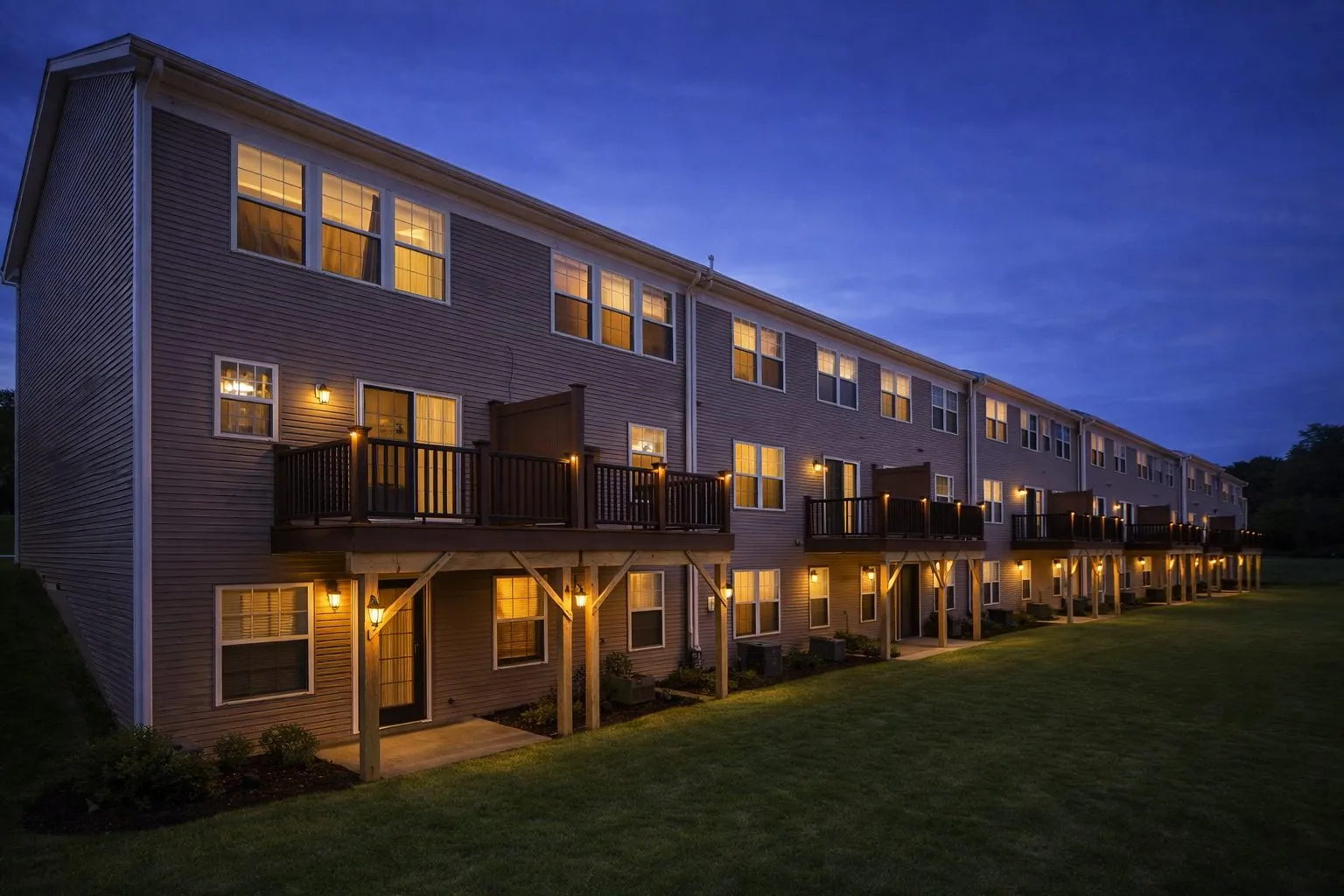
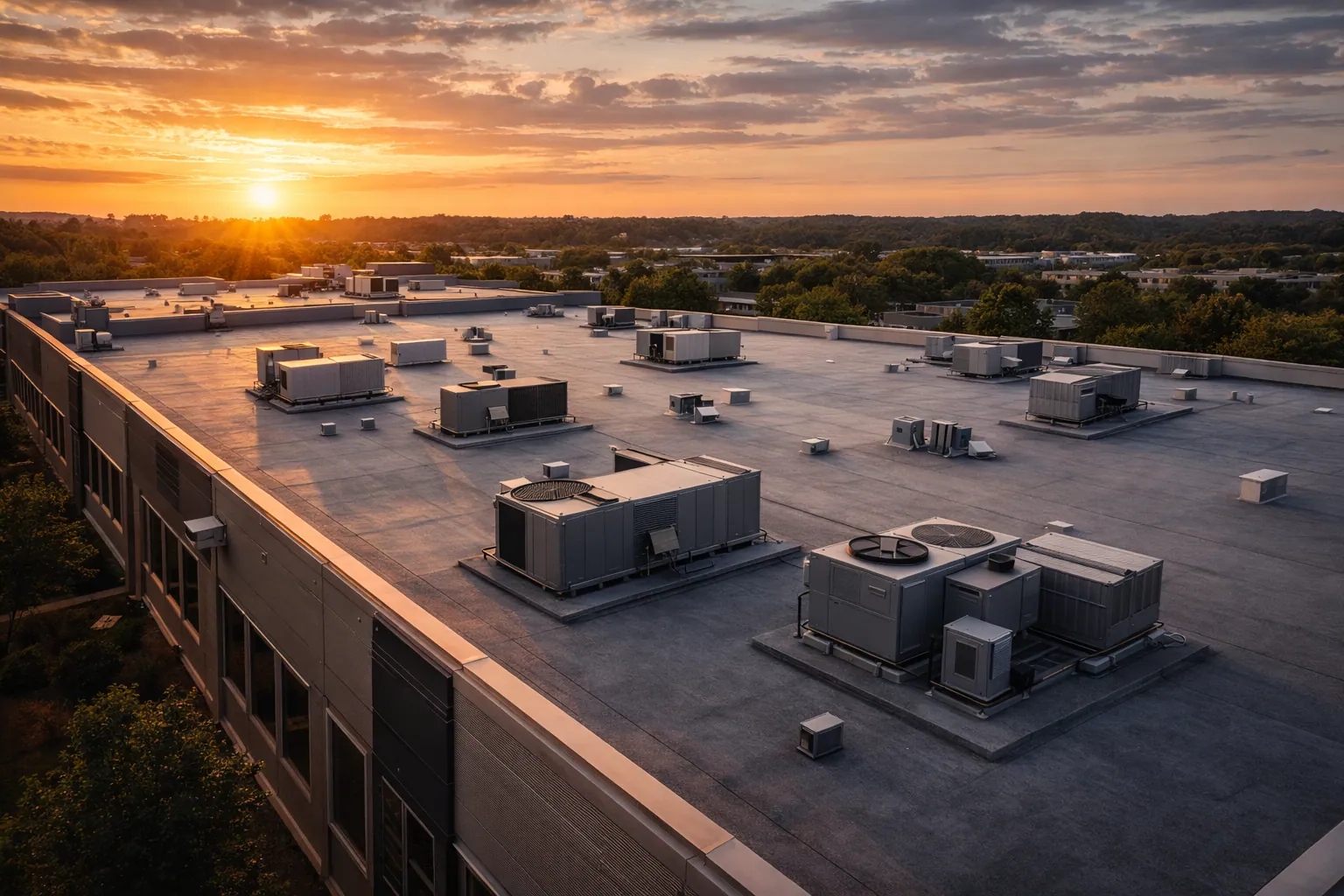
Flat roofs are common on commercial buildings, apartment buildings, and mixed-use properties, and they also appear on homes over additions, porches, garages, and dormers. Although they are called flat, most are actually low-slope roofs, built with a slight pitch so water can drain.
Because water does not run off a low-slope roof as quickly as it does a steep shingle roof, flat roofs depend on a continuous waterproof membrane, careful detailing, and good drainage.
Common Flat Roofing Materials
EPDM is a synthetic rubber membrane that has been used on low-slope roofs for decades. It is durable and flexible in cold weather.
TPO is a single-ply membrane, usually white, with heat-welded seams. Its light color reflects sunlight, which can help reduce cooling costs.
PVC is another heat-welded single-ply membrane, often used where chemical or grease resistance matters, such as near restaurant exhaust.
Modified bitumen is an asphalt-based roofing system applied in layers, often with a granulated surface, and is common on smaller residential flat roofs.
Built-up roofing is made of multiple layers of asphalt and reinforcing felts, often finished with gravel.
The right choice depends on the building, how the roof is used, the existing roof, and the budget.
Drainage Is Everything
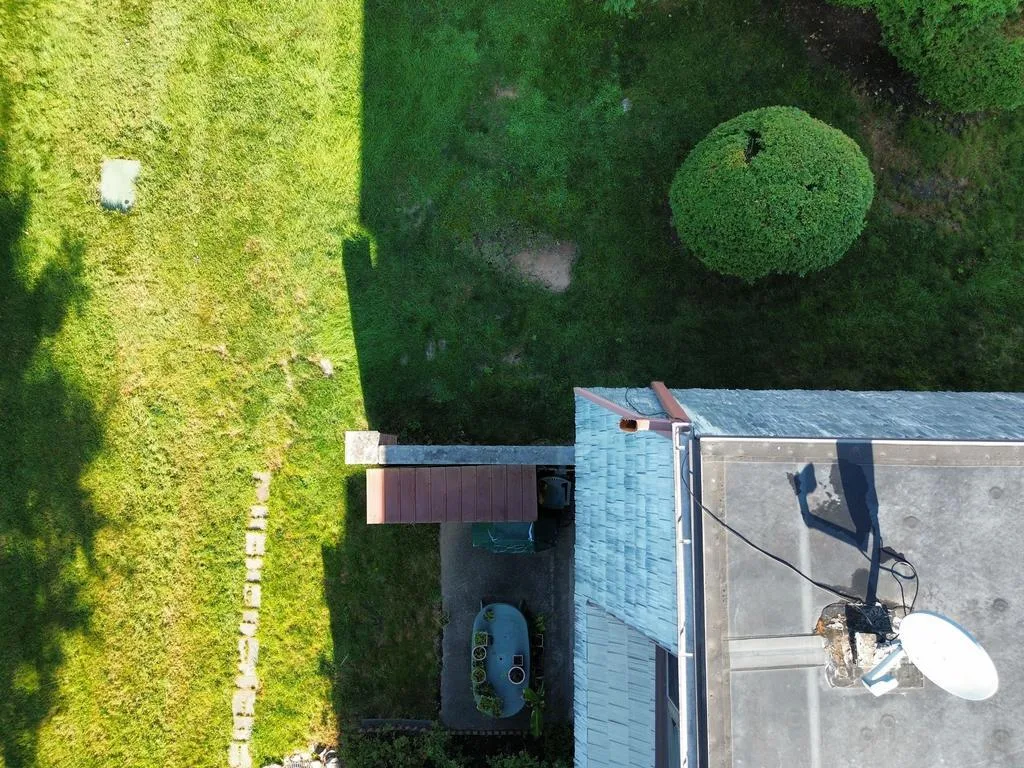
Water that sits on a flat roof long after a rain, known as ponding, adds weight and speeds up wear on the membrane. Drains, scuppers, and gutters must stay clear so water can leave the roof.
Check regularly for:
- Standing water that remains long after rain
- Leaves and debris around drains and scuppers
- Low spots or sagging areas
- Clogged gutters and downspouts at the roof edge
Where Flat Roofs Usually Leak
Leaks on flat roofs most often start at transitions and openings rather than in the middle of the membrane:
- Seams between sheets of membrane
- Flashing where the roof meets walls and parapets
- Pipes, vents, and other roof penetrations
- Bases of rooftop HVAC units and equipment
- Roof edges, coping, and drip edges
Warning Signs
- Blisters, bubbles, or wrinkles in the membrane
- Cracks, splits, or open seams
- Membrane pulling away from walls or edges
- Water stains on ceilings below
- Damp insulation or soft spots underfoot
Maintenance Tips
Flat roofs benefit from inspections at least once a year and after major storms. Keep foot traffic to a minimum, use walkway pads where service technicians regularly access equipment, and make sure contractors working on rooftop units do not damage the membrane.
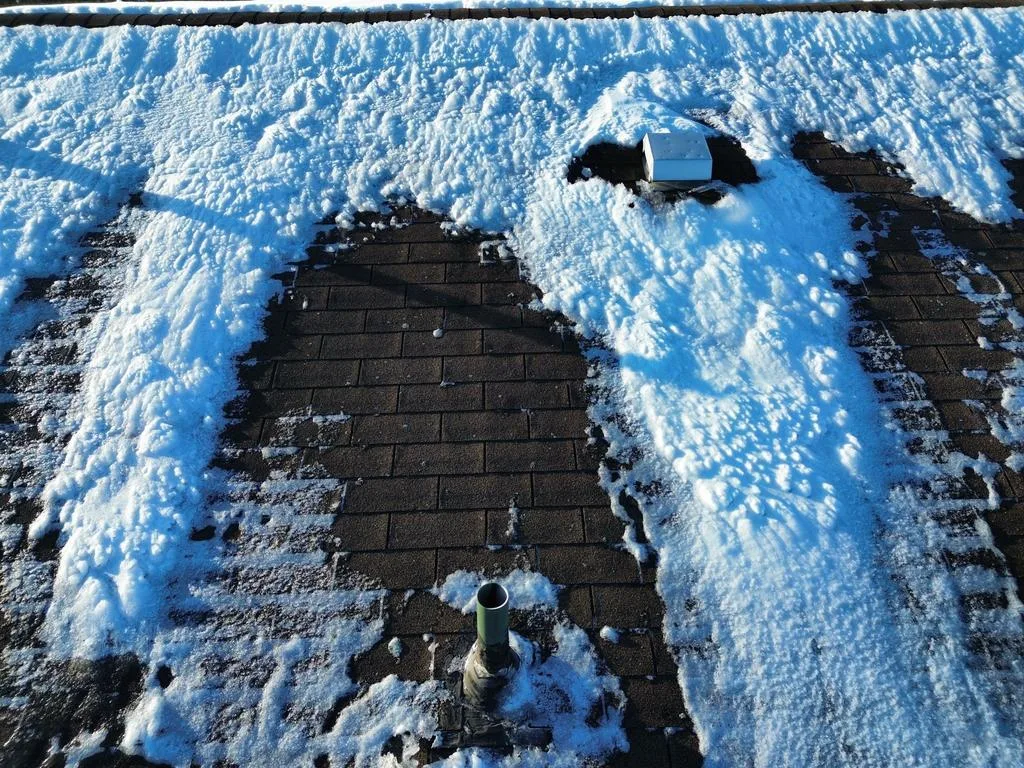
Snow can also accumulate on flat roofs. After heavy storms, watch for signs of excessive load and keep drains clear so meltwater can escape.
Protect Your Property with Add Ventures
Add Ventures helps property managers, associations, and building owners keep flat and low-slope roofs watertight. Our team can inspect roof membranes, drains, flashing, and penetrations, make targeted repairs, and plan replacements when a roof has reached the end of its service life.
Built on Integrity. Committed to Quality.
Questions about your property? Call the office at 845-357-7134 or send us a request.